
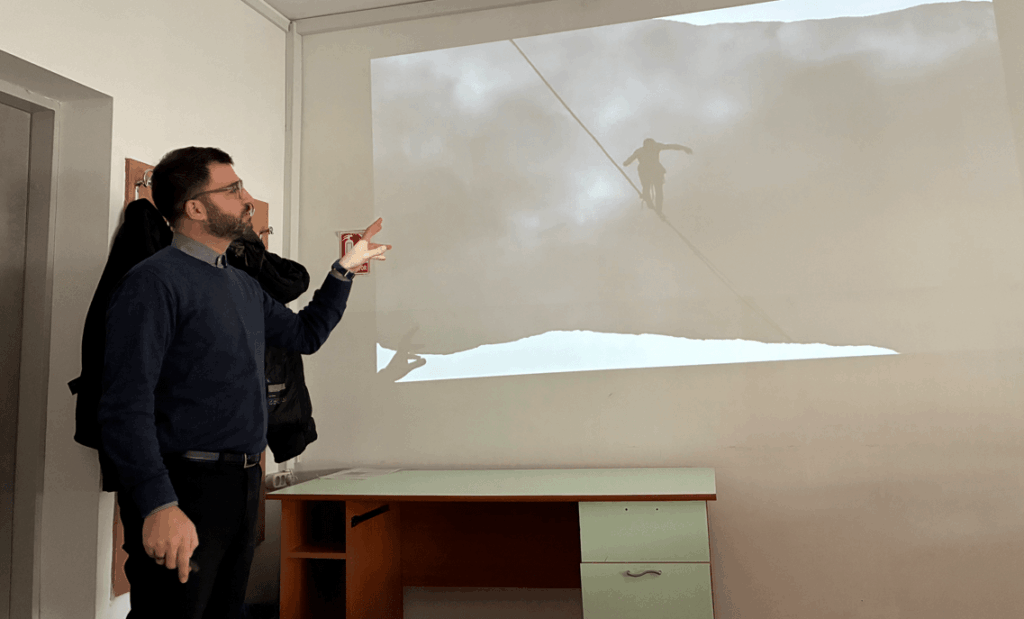
The presentation delivered by Panagiotis Pentaris as part of the Social Works! series offered a critical examination of contemporary transformations in social work through the lens of Glocal Social Work. The lecture emphasised the close conceptual and epistemological relationship between social work and sociology, underlining their shared reliance on sociological imagination as a way of understanding how personal troubles are embedded within broader social structures, institutional arrangements, and global power relations. This shared perspective was presented as fundamental for cultivating critical thinking, ethical awareness, and interdisciplinary openness in social work education and practice.
Building on this framework, the presentation explored the interdependence between local practice and wider national, European, and global contexts, illustrating how everyday social work interventions are shaped by supranational policies, dominant ideologies, and global dynamics. This reinforced the imperative to think globally and act locally.
A central focus of the lecture was the managerialisation of social work, examined through its emphasis on efficiency, performance indicators, targets, and market-oriented values, and its consequences for professional autonomy, relationship-based practice, and social workers’ professional identity. In this context, social work was metaphorically described as a practitioner walking a tightrope – striving to maintain balance between institutional demands, complex social needs, and ethical commitments – not under a clear sky, but beneath a turbulent one, marked by uncertainty, overlapping crises, and sustained systemic pressures.
These dynamics were further discussed in relation to major contemporary challenges, including natural and climate-related disasters, accelerated population ageing, widening social inequalities, and the long-term impacts of the COVID-19 pandemic. The presentation underscored the growing relevance of social work in a world characterised by social insecurity and heightened vulnerability, calling for a critical, reflexive, and interdisciplinary approach to practice.
The subsequent discussions with participants – academic staff and students – highlighted the need to reconceptualise social work not merely as an intervention-oriented profession, but as a key actor in addressing global crises through locally grounded, interdisciplinary responses, capable of navigating the tensions between policy, practice, and the lived realities of people’s everyday lives.
